categoryBalance Transfer
Balance Transfers Explained: How to Pay Off Debt Faster
Learn how balance transfers work, when they make sense, and how to use them to save on interest.


Learn how balance transfers work, when they make sense, and how to use them to save on interest.
If you're carrying high-interest credit card debt, a balance transfer can be a powerful tool to help you regain control of your finances. When used correctly, it can save you hundreds — or even thousands — of dollars in interest. At HelloBetterCredit.com, we believe understanding the details is key to using balance transfers effectively. Let's break it down.
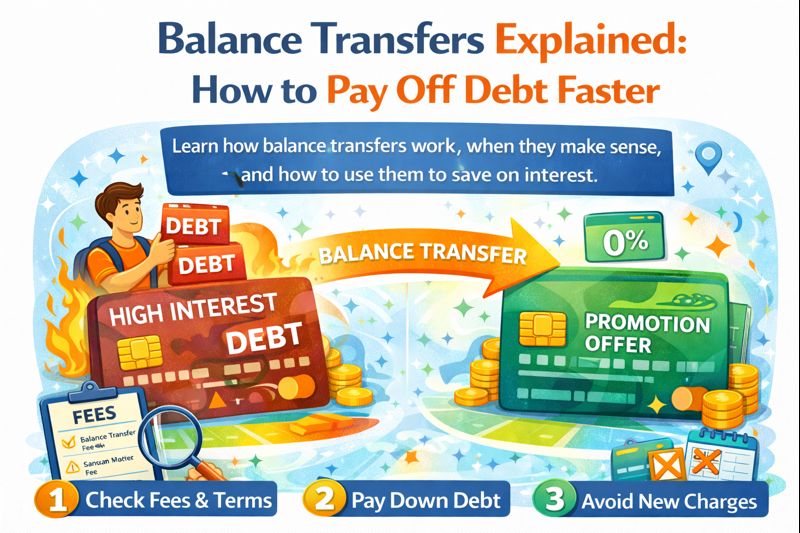
A balance transfer allows you to move debt from one credit card to another — usually to take advantage of a lower or 0% introductory APR. Instead of paying high interest on your existing card, your balance is transferred to a new card with better terms.
Here's how the process typically goes:
Apply for a balance transfer credit card
Request the transfer of existing balances
The new card pays off your old card
You repay the balance under the new APR terms
During the promotional period, you may pay little or no interest
Why consider a balance transfer?
Lower interest rates
Faster debt payoff
Simplified payments
Potential savings on interest
For many people, this can make debt feel far more manageable
While interest rates may be low, balance transfers often come with fees:
Balance transfer fee: Typically 3%–5% of the amount transferred
Late payment fees: Missing a payment can cancel your promo APR
Post-promo APR: Applies after the introductory period ends
Always read the terms carefully
A balance transfer can be a smart move if:
You qualify for a low or 0% APR
You can pay off the balance before the promo ends
The interest savings outweigh the transfer fee
It's less effective if you continue adding new debt
Consider avoiding balance transfers if:
Your credit score is too low to qualify
The transfer fee outweighs the interest savings
You're likely to miss payments
You plan to keep spending on the old card
Balance transfers are a tool — not a solution by themselves
Follow these best practices:
Stop using the old card
Create a payoff plan
Pay more than the minimum
Track the promo end date
Avoid new balances on the transfer card
Discipline is what makes the strategy work
Understanding the impact:
Short term: A hard inquiry may cause a small dip, new credit can lower average account age
Long term: Lower utilization can improve your score, on-time payments build positive history
Used responsibly, balance transfers can actually help your credit
Compare 200+ credit cards and find the one that matches your needs and goals.
Browse All Cardsarrow_forward